




Saudi Arabia Railways
1st
World-first triple-layer rail livery system
3
Protective film layers engineered for abrasion
18 mo.
From development to live deployment
1
Power car running the trial in passenger service
- Sector
- Rail infrastructure
- Project type
- Extreme-environment livery innovation trial
- Service scope
- Advanced materials engineering
- Train branding implementation
- Timeline
- Pilot deployment in live passenger service
Saudi Arabia Railways runs passenger services across open desert, where wind-driven sand strips exterior finishes faster than any conventional livery can withstand. Abrasion. Fading. Constant reapplication. SAR needed a surface that could survive the environment rather than be replaced by it - and proof that it worked in service, not in a laboratory.
SAR needed more than a new livery. They needed a protective system: materials able to resist continuous sand abrasion, an application method engineered for desert operating conditions, and evidence of real-world performance before any decision could be taken across a fleet.
GLIMMA worked with materials specialists to evaluate emerging film technologies, engineered a world-first triple-layer construction using advanced 3M films, and proved it on a live power car in passenger service.
What SAR came to us with was a durability problem. What they left with is a world-first protective livery system, engineered to withstand desert sand erosion and already proving itself in live operational conditions.
A finish the desert wears away
Saudi Arabia Railways operates across desert terrain where extreme sand exposure rapidly degrades exterior train finishes. Conventional livery materials struggle to maintain appearance and performance under continuous abrasion, creating high maintenance cycles and reduced long-term durability.
SAR required a solution that could significantly extend the lifespan of train branding in one of the harshest operating environments in the world.
The challenge was not only aesthetic consistency but engineering a protective surface capable of resisting erosion while remaining suitable for active passenger service.
Proven in service, not in a laboratory.
GLIMMA worked in collaboration with materials specialists to evaluate emerging film technologies and develop a new application strategy tailored specifically to desert operating conditions.
Rather than applying a standard livery process, GLIMMA engineered a trial framework focused on real-world validation. A newly branded power car was selected as a live pilot vehicle, allowing performance to be tested under operational stress rather than in laboratory conditions.
Using advanced 3M films, GLIMMA introduced a world-first triple-layer construction method designed to maximize surface protection while maintaining visual integrity.
Learn about GLIMMA's transport & infrastructure solutionsThree layers. One power car.
Live in service.
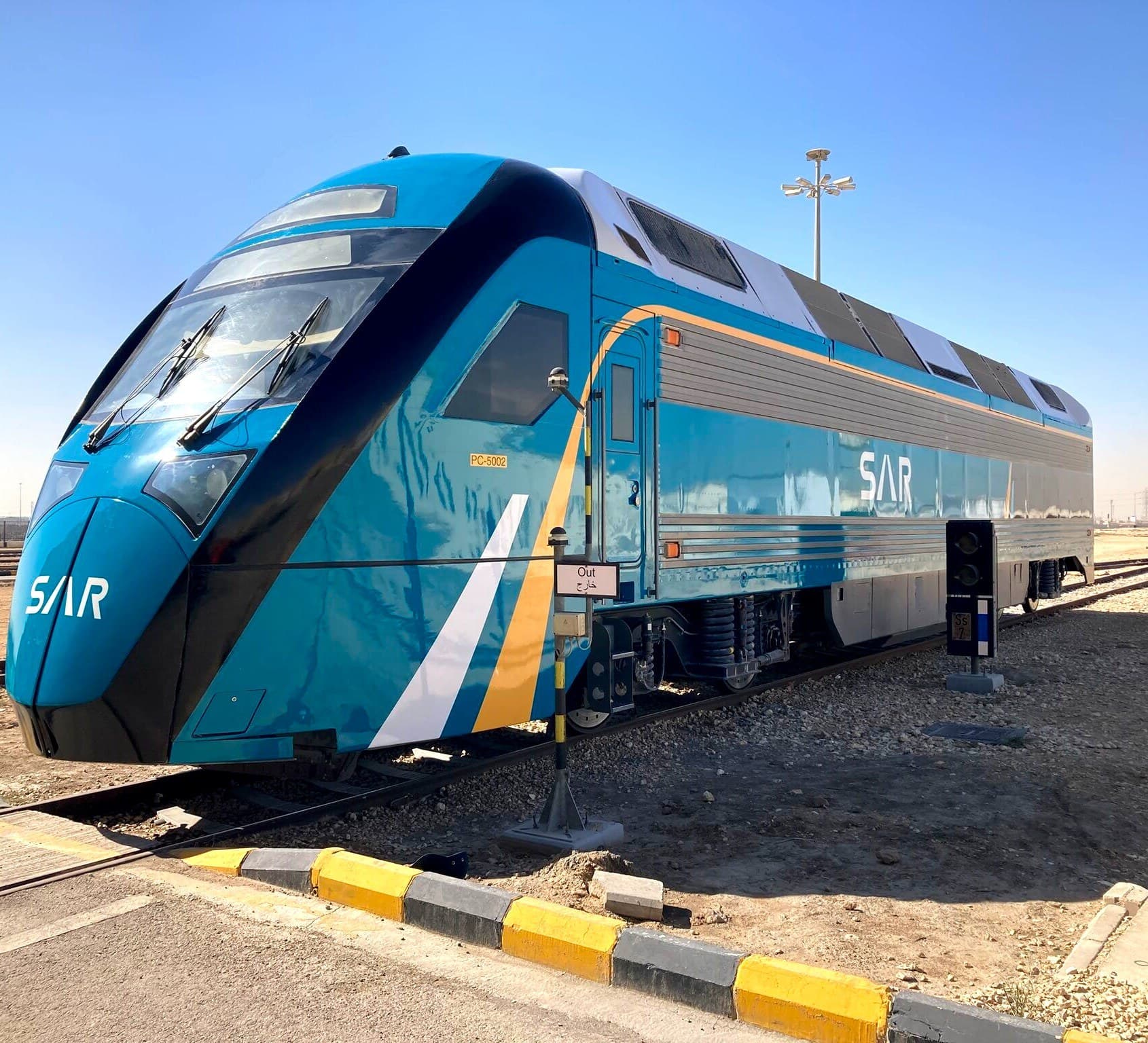
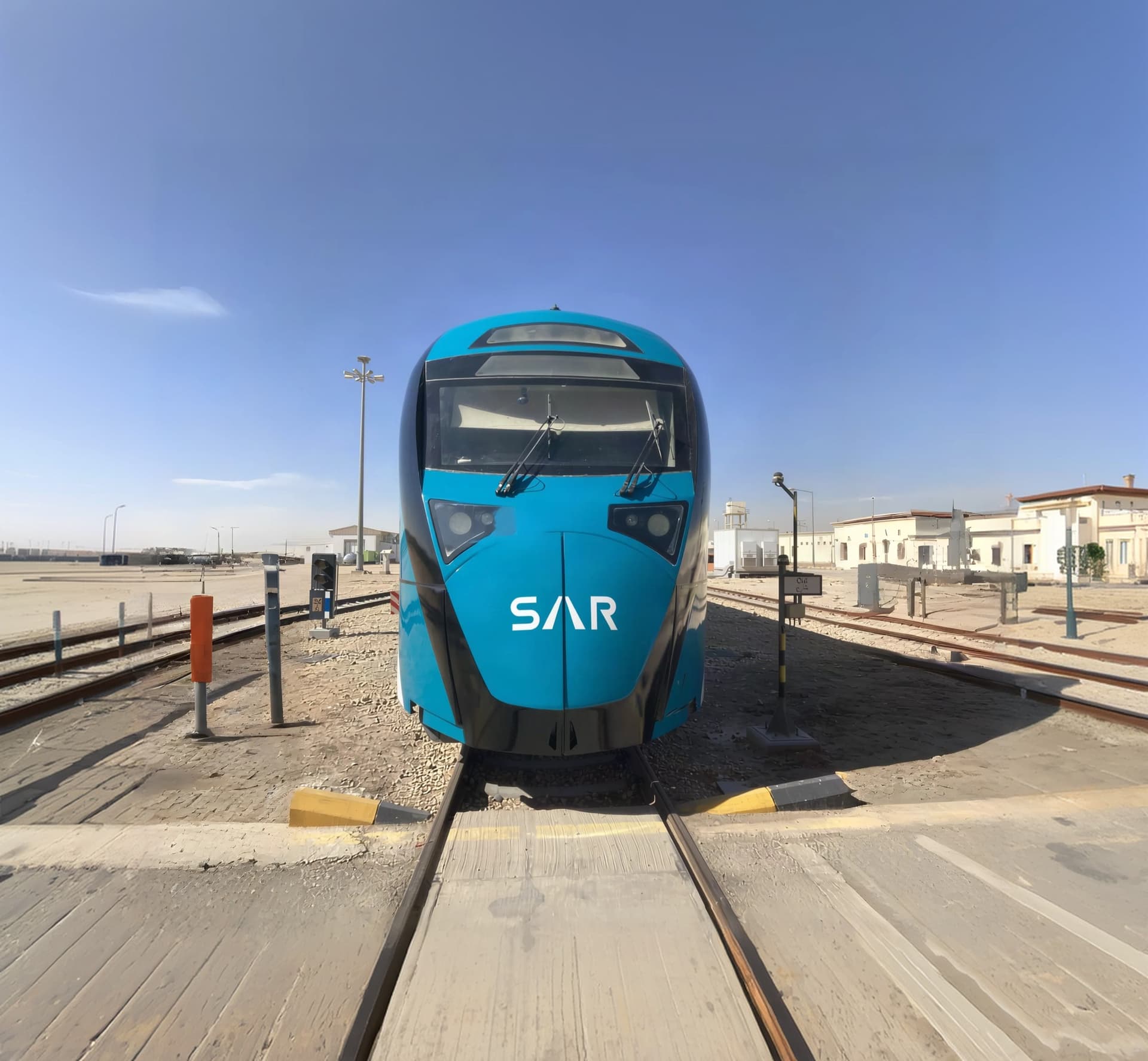
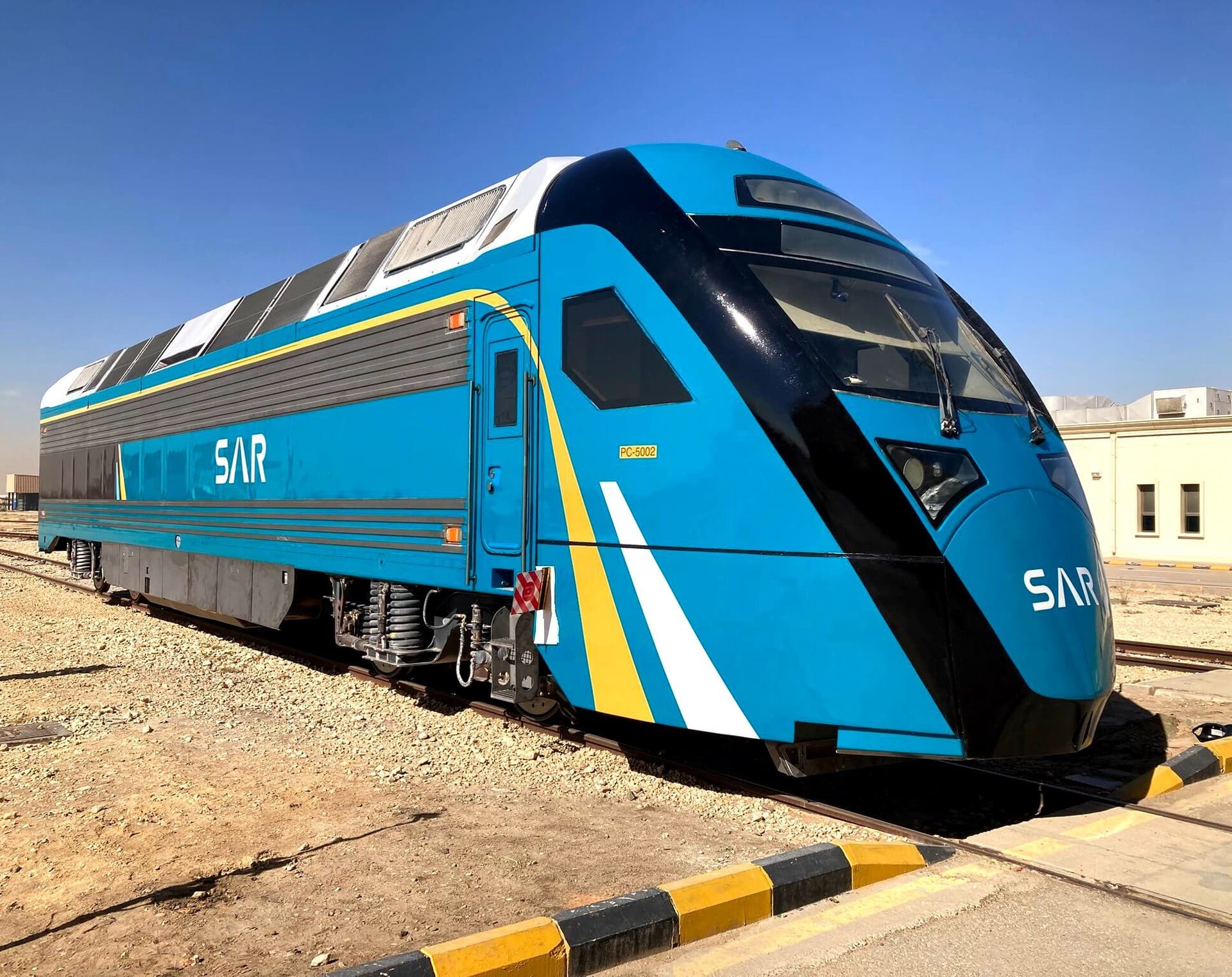
GLIMMA delivered the full branding implementation for the trial power car, applying a custom triple-layer protective film system engineered to resist sand erosion and wear.
The construction combines aesthetic livery presentation with a protective outer barrier, creating a long-lasting exterior finish without compromising brand appearance.
The power car entered passenger service on January 22, 2025, marking the first live deployment of this material strategy in a rail environment.
The trial power car in passenger service - the first live deployment of a triple-layer protective film system in a rail environment.
The trial establishes a new benchmark for extreme-environment branding, transforming the train itself into a working test platform for next-generation materials.
“We are delighted with the result of this work and look forward to validating its higher wear and greater resilience in our service trial.”

Rashed Al Harbi
Senior Fleet Manager
Longer life. Lower maintenance.
Proven in service.
The new material system has the potential to dramatically extend livery lifespan in desert conditions, reducing maintenance frequency and lifecycle cost while preserving brand quality.
Beyond visual performance, the project demonstrates how advanced material science can be integrated into large-scale transport branding, creating operational resilience rather than cosmetic treatment alone.
This live trial positions SAR at the forefront of rail surface innovation and provides a scalable model for future fleet applications. The trial vehicle in operation is a working test platform for the next generation of extreme-environment livery materials.
3
Protective layers in one construction
Jan ’25
Entered live passenger service
1st
Deployment of its kind in rail
Engineering, not graphics
This project required more than branding execution - it demanded engineering-led thinking, materials expertise, and the ability to translate innovation into operational reality.
GLIMMA's strength lies in bridging design, manufacturing, and real-world deployment. Where standard suppliers deliver graphics, GLIMMA develops systems built for environment, scale, and longevity.
SAR needed a partner capable of pioneering a new solution rather than applying an existing one. GLIMMA delivered a world-first implementation that transforms train branding into a protective performance layer.
Materials engineering. Film systems specified and tested for the environment they operate in, not just the brand they carry.
Extreme-environment delivery. Desert heat, sand abrasion, live passenger operations - constraints we design around rather than discover late.
Innovation partnerships. Direct work with 3M and materials specialists on constructions that don't exist off the shelf.
Live-trial validation. Performance proven on a vehicle in service - evidence a laboratory result cannot give you.