






ITA Airways
42
Airports transitioned
22
International airports rebranded
20
Domestic airports rebranded
1
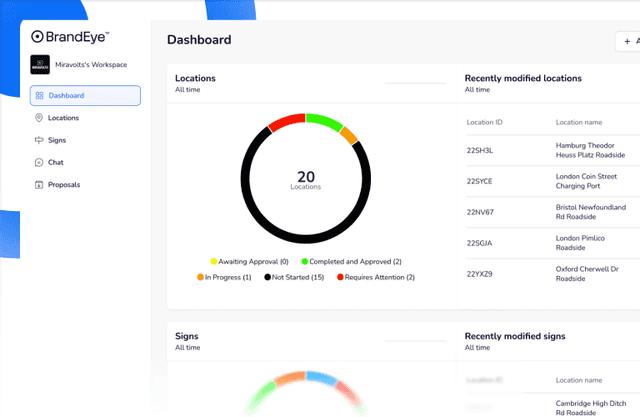
Platform tracking every site
- Sector
- Aviation
- Location
- Europe, North Africa & the Middle East
- Project type
- Airline rebrand and airport network rollout
- Service scope
- Digital self-survey
- Technical specification
- Budget & delivery
- End-of-project audit
ITA Airways launched following the restructuring of Alitalia, introducing a new identity across a network of 42 international and domestic airports.
The rebrand involved replacing existing Alitalia touchpoints while each airport continued operating, with every location requiring its own survey, technical specifications, budget and delivery plan.
GLIMMA managed the programme through a central platform, coordinating surveys, specifications, budgets, production and delivery across the network.
The transition from Alitalia to ITA Airways was delivered across 42 airports through one centrally managed programme.
A new identity, live across a network that couldn’t stop
ITA Airways needed its new identity in place quickly across 42 airports, from major international hubs to domestic locations.
The work covered passenger-facing touchpoints including ticketing counters, check-in desks, gate signage and boarding signage. Each airport had its own technical, logistical and regulatory requirements, but the finished result needed to be consistent everywhere.
And there was no option to simply close the airports while the work happened. Passenger operations had to continue throughout the changeover.
The challenge was to manage 42 individual sites as one coordinated rebrand without disrupting the people moving through them.
One program. 42 locations.
GLIMMA, working alongside Gold Partner DB Ingegneria dell’Immagine, created a centrally coordinated rollout that combined local site knowledge with central control.
Rather than sending teams to manually survey every airport, GLIMMA used a digital self-survey system to capture each location’s specific touchpoints and technical requirements.
An online project platform then brought the information together, giving stakeholders visibility across the entire network while keeping specification, budgeting and delivery under central management.
This allowed each airport to provide the detail needed locally, while the overall program continued to move as one.
Planning a complex multi-site rebrand?
Let’s talk about how GLIMMA can help.From Alitalia to ITA Airways.
One controlled changeover.
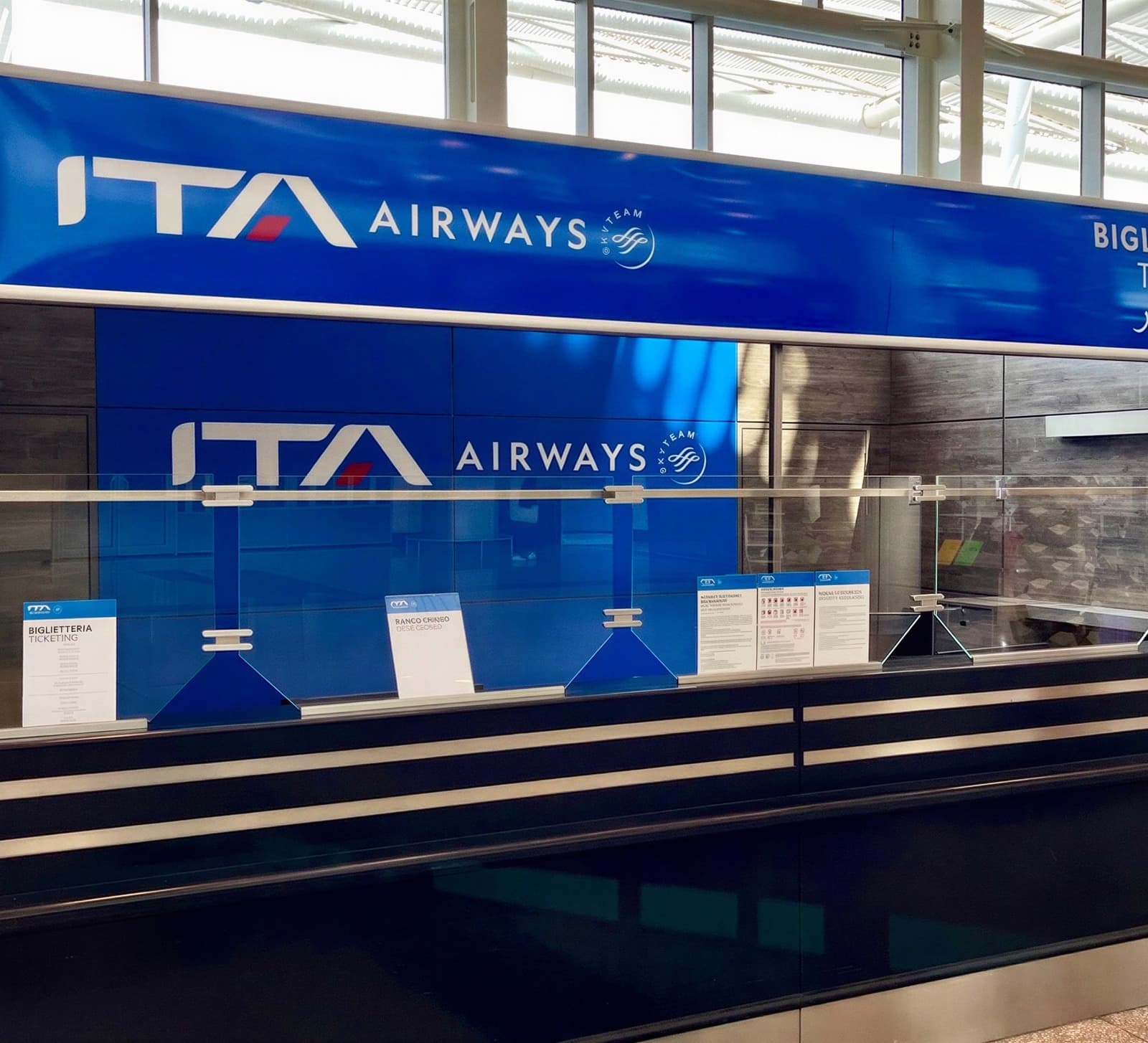
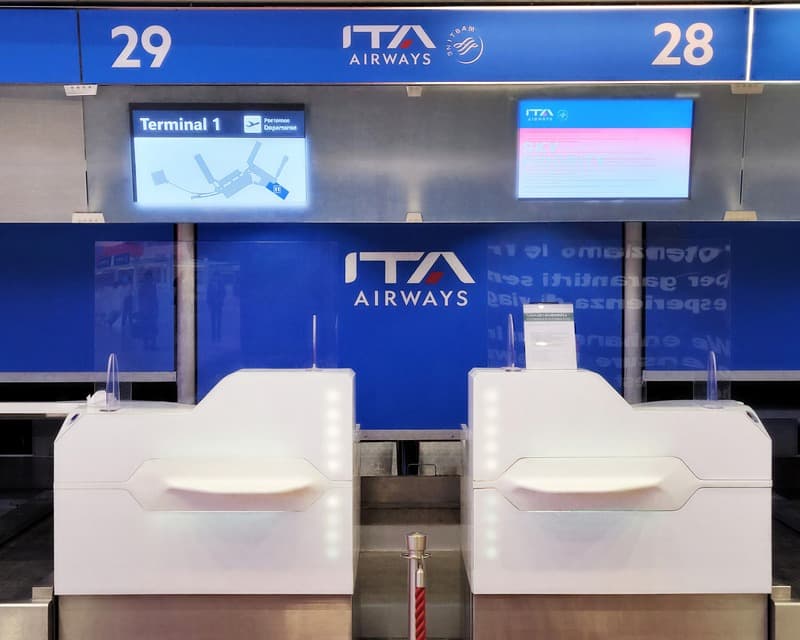
GLIMMA delivered the physical rebrand across the airport network, replacing legacy Alitalia branding across ticketing, check-in, gate and boarding touchpoints.
The program covered digital site surveys, asset capture, technical specification, budget development, rollout planning, production and delivery, all tracked through a central project management platform.
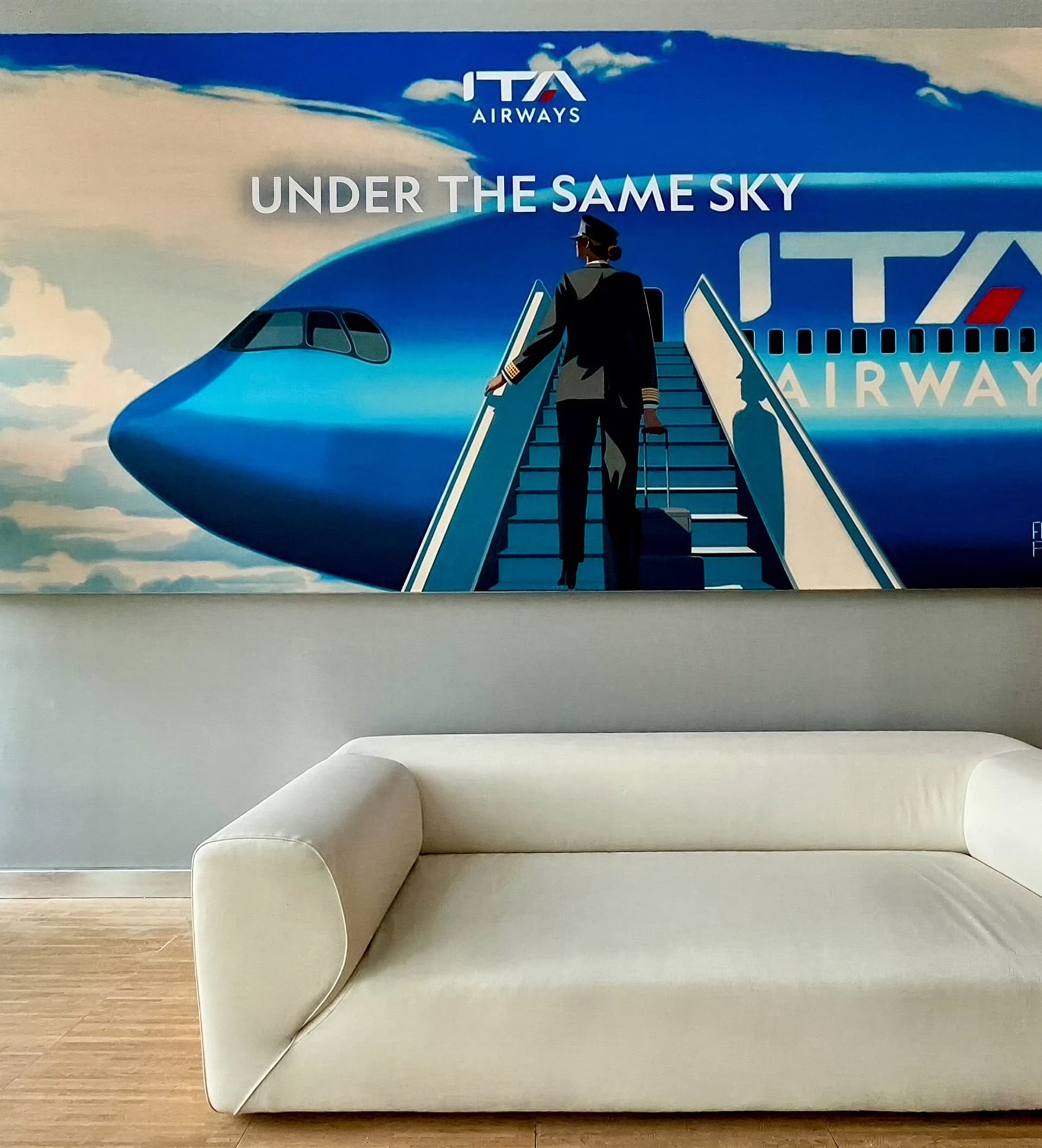
The new ITA Airways identity was also extended into the airline’s own workplace environments, including the illustrated “Under the Same Sky” mural campaign.
The result was a consistent brand changeover across 42 airports, without taking passenger-facing operations offline.
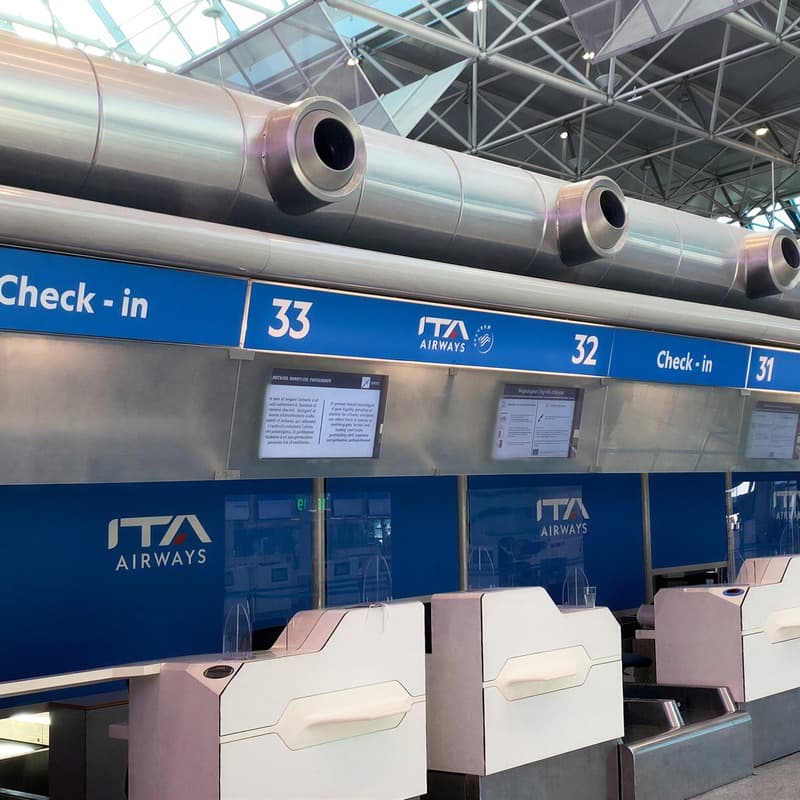
42 airports, one specification, one controlled program.
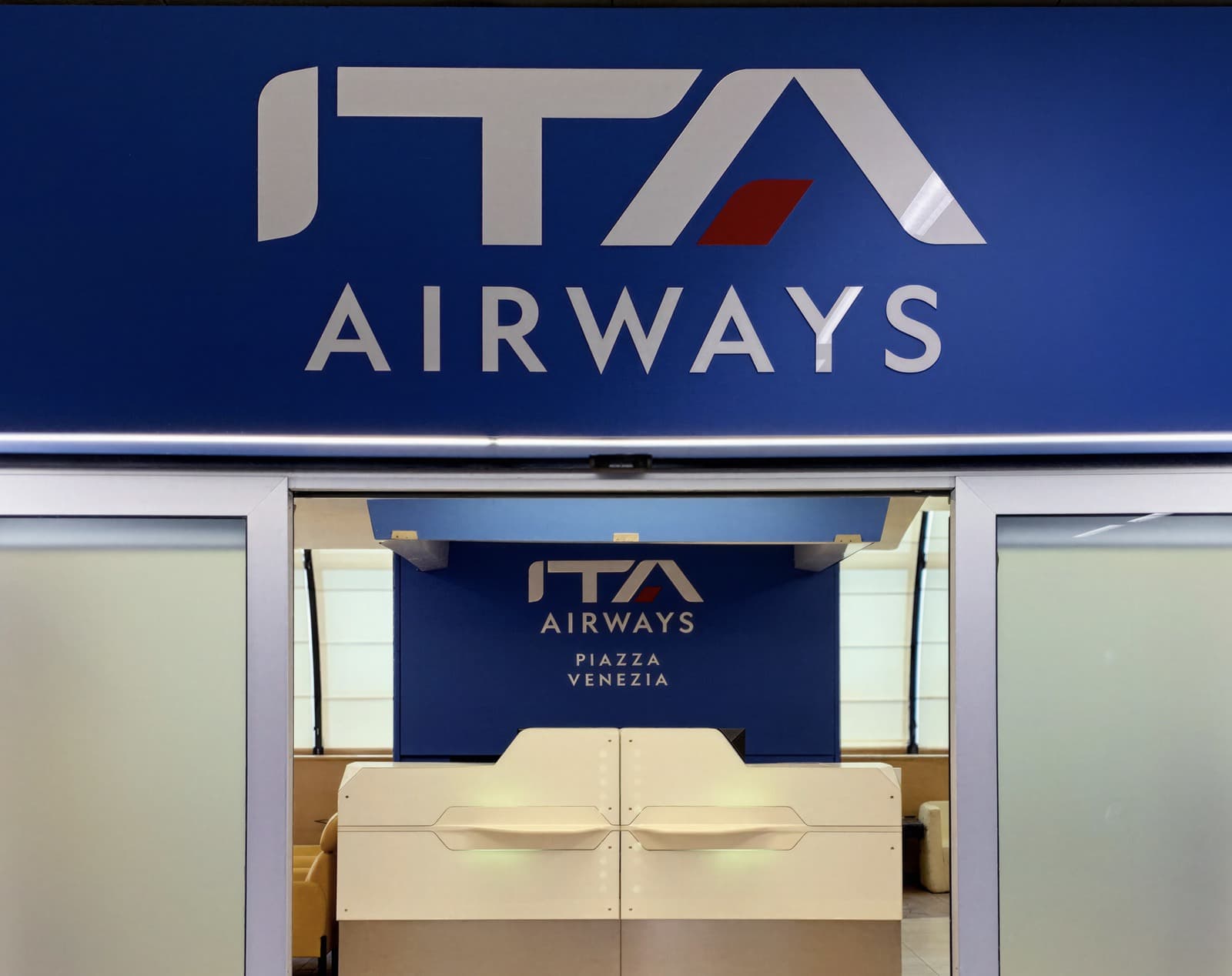
Each airport captured its own requirements. GLIMMA kept the whole network in view.
One controlled changeover,
not 42 separate jobs.
The Alitalia-to-ITA Airways transition was delivered across 42 airports while passenger-facing operations remained live.
A structured approach to surveying, specification, budgeting, delivery and audit gave ITA Airways visibility and control across the entire network, while allowing each location to work around its own requirements.
The result was a consistent new identity across international and domestic airports, supported by a complete digital record of the program and its delivery.
42
Airports transitioned
3
Regions covered
0
Airports taken out of operation
One point of control across a live airport network
A multi-site rebrand becomes difficult when every location starts behaving like a separate project.
GLIMMA brought the network together under one program, combining structured governance, digital audit tools and a trusted delivery partner network to give ITA Airways a single view of progress, specification and delivery.
That meant local requirements could be captured without losing central control of the brand.
Global delivery network. Delivery coordinated through GLIMMA’s network and Gold Partner DB Ingegneria dell’Immagine across three regions.
Our partner networkAviation sector experience. Passenger-facing airport touchpoints delivered while airport operations remained live.
Transport & infrastructureStructured program governance. Specification, budget and rollout planning managed centrally across the full network.
Brand governance & controlDigital audit and tracking. Self-survey tools and a central platform providing visibility across all 42 locations.
Tools & technology